How Long Does It Take to Complete a Welding Technology Program in Florida?
If you're thinking about welding school in Florida, you're probably wondering how long you'll actually be in training.
The time it takes to complete a welding technology program depends on the school, curriculum, and training schedule. At Coastal Technical Institute, the Welding Technology Program is designed to be completed in 42 weeks and includes 700 clock hours of training.
When comparing welding schools in Florida, it's helpful to look beyond the number of months. Clock hours, hands-on training, class schedules, and the skills covered can all affect your overall training experience.
So, how long does welding school take? The answer depends on the program, its clock-hour requirements, and how the training is scheduled.
How Long Does a Welding Technology Program Take in Florida?
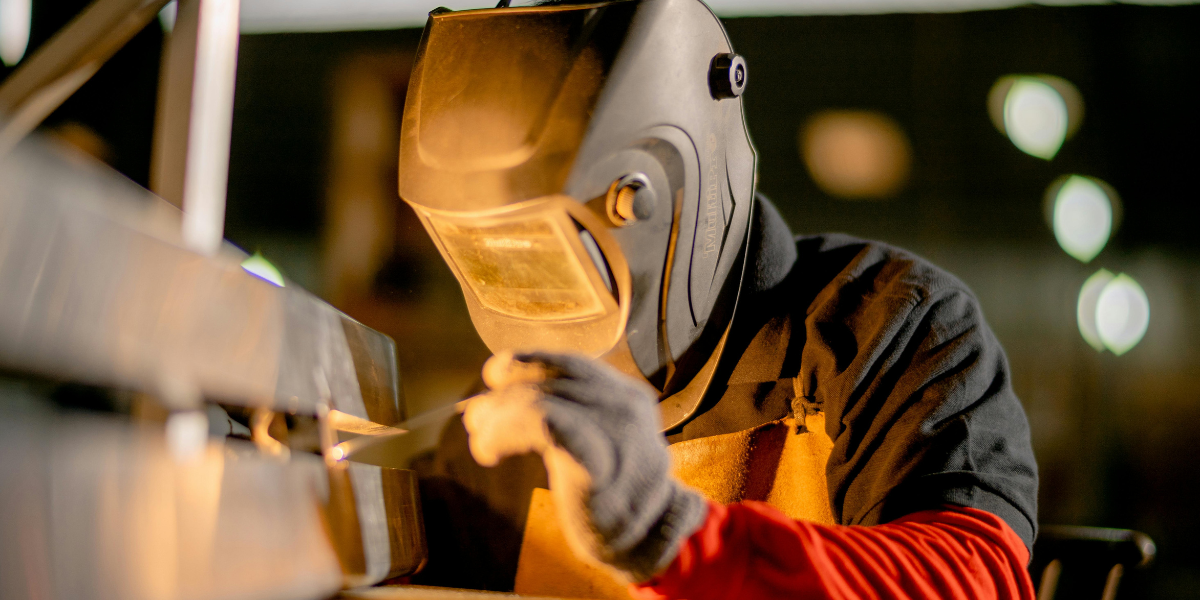
The length of a welding technology program depends on the school and curriculum. At Coastal Technical Institute, the Welding Technology Program is listed at 42 weeks and 700 clock hours. The program covers welding fundamentals, fabrication, structural welding, pipe welding, TIG, MIG, and related technical skills.
Program schedules can affect how students experience their training timeline. Full-time students generally follow a structured schedule designed to keep them progressing through the curriculum. If you're considering a welding program while working, ask the school about available schedules and how attendance requirements may affect your completion timeline.
Evening classes are a different story. If you're working during the day, they can make welding school much easier to fit into your life. The tradeoff is time. With fewer training hours each week, completing a program may take longer. If you're considering evening training, ask the school about its schedule, weekly training hours, and expected completion timeline.
Why one welding program may take longer than another
The number of months on a school's website doesn't tell you everything.
Imagine one program has students in the shop five days a week. Another meets only a few evenings each week. Even if they teach similar skills, those students are going to move through the program at very different speeds.
That's why clock hours are useful. They show how much scheduled training is built into the program.
The way those hours are used matters too.
Welding takes practice. You can understand the idea behind travel speed, electrode angle, joint preparation, or heat settings pretty quickly. Getting your hands to do the same thing consistently takes longer. There's no shortcut around time under the hood.
For that reason, the shortest program isn't automatically the right one. A schedule you can attend consistently may serve you better than a faster program that becomes difficult to keep up with.
What will you actually learn in welding school?

Most students begin with the basics: shop safety, equipment setup, metal preparation, and how to work around welding equipment properly.
Then the hands-on work starts to build.
Depending on the school, students may train in processes such as Shielded Metal Arc Welding (SMAW), Gas Metal Arc Welding (GMAW), and Gas Tungsten Arc Welding (GTAW). At Coastal Technical Institute, the Welding Technology curriculum includes SMAW, MIG, and TIG welding, along with structural, pipe, and non-ferrous welding.
Students may also spend time learning cutting techniques, metal identification, blueprint reading, fabrication, joint preparation, and welding symbols.
Some of that sounds fairly straightforward on paper. In the shop, it becomes much more physical.
You learn what happens when your angle is slightly off. You see what too much heat does to the material. You figure out why a weld that looked fine at first needs another pass. Those small corrections are a big part of learning the trade.
If you're curious about what the training week can actually feel like, Coastal Technical Institute's guide to a week in welding school in Palm Bay gives you a closer look.
You can also read about the skills needed before starting welding trade school. You don't need to arrive knowing how to weld, but being comfortable following instructions, working safely, and learning through repetition certainly helps.
How much practice time matters?
A lot.
Welding is one of those skills where knowing what you're supposed to do and being able to repeat it are two different things.
Your first few welds may be rough. That's normal for someone learning a hands-on skill. Over time, you start noticing things you didn't notice at the beginning. The sound of the arc changes. Your movements become steadier. You start recognizing when something is wrong before you finish the weld.
That improvement comes from repetition and feedback.
This is also why clock hours deserve attention when you're comparing local welding classes. Ask how much of the program is dedicated to hands-on welding practice and how the school divides time between classroom instruction, demonstrations, and lab training.
A practical way to compare welding schools
Program websites can throw a lot of numbers at you. You don't need to make the comparison complicated.
Start with the total clock hours.
If one welding trade school lists a specific number of clock hours, ask what those hours include and how much time is dedicated to hands-on practice.
Next, look at the weekly schedule. How many days will you attend? Are the classes during the day or evening? How long are the lab sessions?
Then ask about attendance and make-up work.
This one matters, especially if you're working while you're in school. Hands-on training is an important part of learning welding, so ask how the school handles missed lab sessions and whether missed training could affect your completion timeline.
A program can look fast when you see a short completion timeline on a webpage. What you really need to know is what that timeline will look like in your weekly life.
Does welding certification take additional time?

It can.
Completing welding school and earning a welding certification aren't necessarily the same step. Your training can prepare you for certification testing, but the exact process depends on the credential and the type of welding work you're preparing to do.
Coastal Technical Institute's Welding Technology Program includes certification-focused training and AWS standards awareness. The course catalogue also notes that graduates may be eligible for AWS welding certifications.
Before enrolling, ask the school which certifications the program helps prepare you for. It's also smart to ask whether the certification test is included with the program or arranged separately.
Those details are easy to overlook at the beginning, but you'll be glad you asked.
Can you become a welder without spending four years in college?
For many welding career paths, you don't need a traditional four-year degree.
That's part of the appeal for people who already know they want a hands-on career. Instead of spending several years completing a broad academic program, you can focus your time on learning welding processes, safety, fabrication, blueprint reading, and related trade skills.
That doesn't mean every welding job is the same; far from it.
The work can vary depending on your experience, the welding processes you know, the industry you're entering, and the certifications an employer requires.
If you're still figuring out where welding could take you, Coastal Technical Institute has information on welding career opportunities in Florida.
There's also a useful guide to welding careers without a four-year degree if you're comparing technical training with a traditional college path.
What should you ask before choosing a welding program?

Start with the questions that will affect your everyday routine.
What time do classes begin? How many days a week will you be on campus? How much time will you spend welding? Which welding processes are covered? What equipment will you need?
Then ask about the things that affect what happens after training. Does the program prepare students for welding certification? What kind of career preparation is included? Are there extra testing costs you should plan for?
And don't underestimate the commute.
A school may look perfect on paper, but driving a long distance several days a week can become tiring quickly, especially if you're balancing training with a job or family responsibilities. For many students, finding local welding classes with a schedule they can realistically maintain is a big part of finishing successfully.
How do you choose the right timeline for you?
There's no prize for choosing the fastest welding program.
If you can attend full time and want to move into the workforce sooner, an intensive daytime schedule may make sense. If you need to keep working while you train, evening classes may give you the breathing room you need, even if graduation comes a few months later.
Think about what you can actually maintain week after week.
A steady training schedule usually beats an ambitious one that becomes impossible after a month or two.
Start your welding training in Florida
At Coastal Technical Institute, the Welding Technology Program is designed to be completed in 42 weeks and includes 700 clock hours of training.
When comparing welding programs in Florida, don't look at the number of months alone. Look at the clock hours. Look at the shop time. Ask about the schedule, the welding processes you'll practice, and the certification preparation available.
The right program is one that gives you the practical training you need while fitting your schedule and career goals.
Look at the clock hours. Look at the shop time. Ask about the schedule, the welding processes you'll practice, and the certification preparation available. Then think about whether you can realistically show up and put in the work every week.
That's the part that matters.
If you're looking for hands-on welding training in the Palm Bay area, you can explore the Welding Technology Program at Coastal Technical Institute.
When you're ready, contact Coastal Technical Institute to ask about program details, schedules, admissions, and upcoming classes.
FAQs
How long does a Welding Technology Program take in Florida?
Program length varies by school. At Coastal Technical Institute, the Welding Technology Program is designed to be completed in 42 weeks and includes 700 clock hours of training.
Can I finish welding school in less than a year?
Yes. Some welding programs can be completed in about a year or less. At Coastal Technical Institute, the Welding Technology Program is structured for 42 weeks of training, which is roughly 10 months.
Will evening welding classes take longer?
It depends on the school's schedule. Evening programs may take longer if they include fewer training hours each week. If you're considering evening classes, ask the school about the weekly schedule and expected completion timeline.
What do you learn in a Welding Technology Program?
Training may cover Stick, MIG, and TIG welding along with safety, metal preparation, cutting, fabrication, blueprint reading, and welding symbols. The exact curriculum varies by school. At Coastal Technical Institute, training also includes structural, pipe, and non-ferrous welding.
Is welding certification included with welding school?
That depends on the program. Welding schools may prepare students for industry certification tests, but the actual testing process and fees can be separate. Ask the school which credentials its training prepares you for.
Do you need welding experience before starting welding school?
Beginners can enter welding training without already knowing how to weld. You'll usually begin with safety, equipment, and basic techniques before moving into harder processes and positions.
Do you need a four-year degree to work as a welder?
Many welding career paths do not require a four-year degree. Technical schools and certificate
programs give students a shorter, skills-focused route into the trade.
