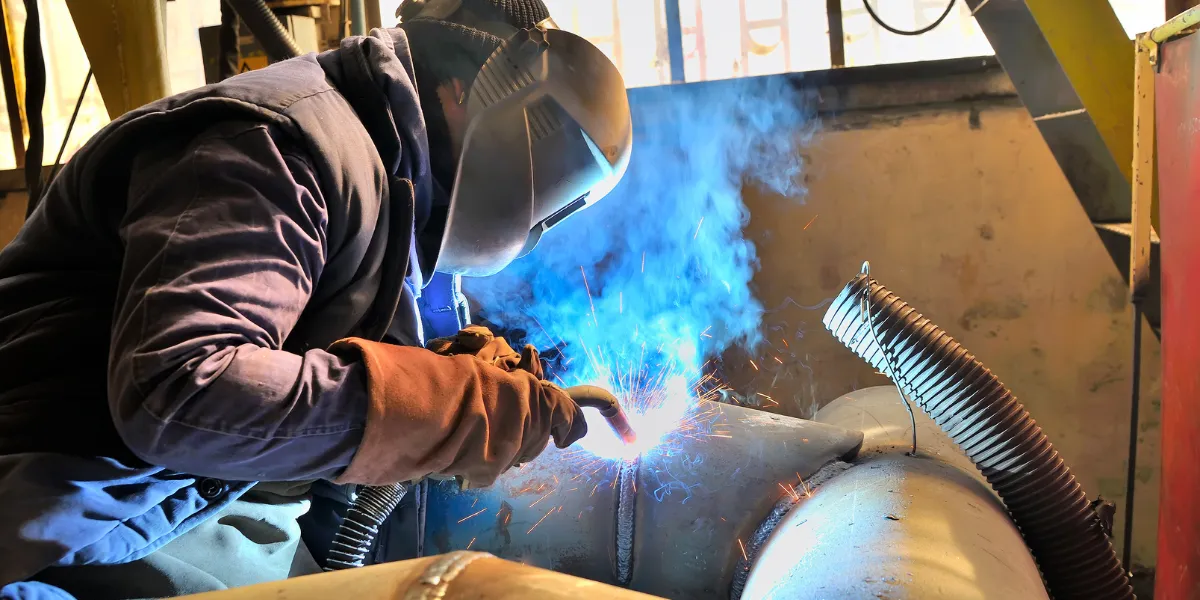
A Week in Welding School in Palm Bay: Lab Time, Practice & Skill Checks
If you’re thinking about welding school, you’ve probably noticed something: most program pages tell you what you’ll learn, but almost nobody tells you what a normal week actually looks like.
And that’s the part you’re trying to picture. You’re asking practical questions because you’re a practical person. How much time will I spend actually welding? Am I going to be stuck in a classroom all day? What happens if I’ve never held a torch or set a machine before? How do instructors know I’m improving? So let’s make it real.
This is a realistic, down-to-earth look at what a week in welding school can feel like in Palm Bay, Florida, with a training environment like Coastal Technical Institute. Not a fantasy schedule. Not a “motivational” version.
Just what it’s like when you’re learning a trade: some days you feel unstoppable, some days you’re humbled by a weld puddle that refuses to cooperate, and most days you go home tired in a way that feels earned.
If you want to see the program overview first, here’s the CTI page:
The first thing people don’t realize: welding school is about habits, not hero moments

When people think of welding, they imagine the sparks. The hood. The “cool” part. But if you talk to anyone who’s actually good at it, they’ll tell you the truth: what makes a welder valuable isn’t the sparks, it's consistency.
A strong trade school program isn’t trying to turn you into a superhero
welder in a week. It’s trying to give you repeatable habits:
Setting up correctly without guessing
Following safety rules automatically (even when you’re tired)
Reading what your weld is telling you
Making small adjustments instead of random changes
Building muscle memory through repetition
At Coastal Tech, the Welding Technology Program is built around the skills employers recognize: MIG, TIG, Stick, plus blueprint reading, metal fabrication basics, oxyfuel cutting, safety, and certification prep (AWS). Those aren’t buzzwords. Those are the building blocks.
What a “real week” usually looks like (and why it’s not the same every day)

Every school has its own calendar, but most weeks in welding training follow a rhythm. You’ll move between explanation, demonstration, hands-on lab work, and check-ins. The balance shifts as you improve.
Let’s walk through a realistic week.
Monday: you’re not just “starting”—you’re resetting
Monday has a certain vibe. It’s not dramatic, but it matters. The goal is to get everyone grounded and moving in the same direction.
You’ll usually start with safety and routine. That might sound boring until you realize how many beginners get stuck because they’re skipping steps they didn’t even know were steps.
Monday is often about:
PPE and safety reminders (helmet, gloves, jacket—no exceptions)
Getting comfortable with the lab space
Setting up your station properly
Running warm-up beads and fundamentals
Here’s what “warm-up” means in real life: you’re teaching your hands to do the same thing twice. Then three times. Then ten times. This is where you stop chasing “one good weld” and start building the ability to repeat good welds.
Some students walk on Monday feeling nervous. By the end of the day, the nerves usually shift into focus, because you’re doing something physical and clear. You can see your work immediately. It’s not vague. The weld either looks better or it doesn’t, and you learn from it either way.
Tuesday: the day you learn the most (because you get coached in the moment)
Tuesday is often where you’re introduced to a technique, a process, or a new way of doing something you thought you understood.
This is when instructor demonstrations matter. A good demo isn’t just “watch me weld.” It’s:
what the machine settings are doing
what your hand position should look like
how to hold your angle
what the sound should be (yes, it matters)
what mistake is about to happen before it happens
Then you step in.
And here’s the honest part: your first attempts might look rough. That’s normal. Most beginners don’t struggle because they’re “bad.” They struggle because welding requires a few skills at once: distance, speed, angle, and steadiness and you’re learning them all together.
Tuesday is also the day you start hearing quick instructor feedback that sticks in your head:
“Slow down a touch.”
“Don’t chase it—stay steady.”
“Bring your angle back.”
“Your start was good; keep the same pace.”
Those short notes are gold. They’re the difference between practicing wrong for weeks and improving in days.
Wednesday: the “reps” day (where it gets frustrating… and that’s a good sign)
If Tuesday is learning, Wednesday is repetition.
This is usually when you spend longer stretches actually welding. It can feel repetitive, but repetition is the point. You’re building control.
It’s also the day many students hit a mental speed bump: you’ll have a decent weld, then the next one looks worse, then you start overthinking everything.
That moment is more normal than people admit.
Wednesday is where you learn one of the most valuable trade lessons:
don’t guess—diagnose.
Instead of thinking, “Why is this happening? I’m just not good,” you start
asking better questions:
Did I clean the metal enough?
Did I change my distance without noticing?
Did my speed change because I got tense?
Are my settings right for what I’m doing today?
That’s not just welding school. That’s job site thinking.
Thursday: the day it starts to feel like real-world work (not just practice)
A lot of students assume welding is only about making a bead.
But on actual jobs, welding usually comes after other steps:
measuring
cutting
fitting pieces together
tacking
checking alignment
reading drawings or instructions
So Thursday is often where programs introduce more of the “shop brain” side of welding things like blueprint reading and fabrication basics. Even if it’s simple at first, it changes how you think.
Because now you’re not welding “a bead on a plate.” You’re welding with a purpose. You’re starting to understand why fit-up matters, why prep matters, and why someone can have great weld technique but still struggle if they don’t set the job up correctly.
And honestly—some students love this part. It feels less like school and more like learning how the trade actually operates.
Friday: skill checks, feedback, and that small “I’m better than last week” moment
Friday usually has a checkpoint feeling. Not necessarily a stressful exam vibe, but a “let’s see where you’re at” vibe.
Skill checks can look like:
performing a specific weld you’ve been practicing
following the proper setup and safety steps
having an instructor review consistency, technique, and improvement areas
This part matters because it keeps training honest. You’re not relying on confidence alone—you’re looking at results.
Most weeks, you’ll notice something has improved. It might be small:
your bead is straighter
your starts/stops are cleaner
you’re less shaky
you’re controlling heat better
you’re correcting mistakes faster
That’s what “getting good” looks like in the trades. It’s not magic. It’s stacking small wins.
“Do I need experience?”

Most people start with zero experience. Truly. They haven’t touched a welder, they don’t know what settings mean, and they’re nervous about messing up.
That’s fine.
What matters more than experience is:
showing up consistently
being coachable
taking safety seriously
being willing to practice even when it’s not fun
If you can do that, welding school is learnable. Very learnable.
If you’re in Palm Bay: why touring the lab matters more than reading a hundred blogs

If you’re seriously considering a trade school program, the fastest way to get clarity is to see the environment. You’ll know immediately if it feels like a place where you can learn.
Coastal Tech makes that step simple:
Schedule a tour: https://coastaltechnicalinstitute.com/schedule-tour
Main site: Coastal Technical Institute
Still comparing trades?
Sometimes you’re drawn to welding, but you still want to compare it to other skilled trades programs.
Coastal Tech offers:
HVAC Technician Training Program:
https://coastaltechnicalinstitute.com/hvac-technician-training-program
Electrical Technology Program:
https://coastaltechnicalinstitute.com/electrical-technology-program
Welding Technology Program:
https://coastaltechnicalinstitute.com/welding-technology-program
Trades overview:
https://coastaltechnicalinstitute.com/trades-program
FAQ’s
Is welding school mostly a classroom?
No, if you choose a strong program, most of the confidence comes from hands-on lab time. Classroom learning supports safety, technique, and blueprint basics.
What if I’m not great with my hands right away?
That’s normal. Welding is coordination. It improves with reps and coaching.
How will I know if I’m improving?
You’ll see it in your weld consistency, and instructors track progress through feedback and skill checks.
Want to see the Welding Technology Program details?
If you want a hands-on career where you can build something real and you like the idea of learning in a lab, not just from a textbook start with the program page and book a tour.
