Blog
Invest in your future—with flexible options.

How Electrical Technology Training Builds Problem-Solving Skills for Career Success
Many people believe that being an electrician is all about pulling wires and color matching. This is precisely the reason why so many employees reach a plateau in their careers early on and why those who make it to the top think differently from day one.
The top-paid electrical professionals don't get paid just for their hands. Their reward for what goes on in their head is to be able to diagnose complex and unpredictable system failures rapidly, safely, and under pressure. It's not something one can learn from YouTube video guides or a few bits of advice. It is a combination of learning in structured electrical technology training and being able to think like an electrical technician.
Thinking like a tech in the electrical industry involves applying fundamental physical principles such as Ohm's law, load calculations, and circuit theory, as well as national and local safety standards, to systematically isolate and troubleshoot failures. It's a disciplined, methodical process. And it's a skill that can be learned if you train in the proper setting.
Whether you're exploring an electrician apprentice program, searching for an electrical technician school near me, or comparing your first electrical certificate course, the single most important question to ask is this: Can this course show me how to solve problems, or just how to follow procedures? This blog explains how quality electrical technology training can develop that capability and what to look for in a program that actually delivers it.
Why Problem-Solving Is the Ultimate Skill for Electricians
The Dynamic Nature of the Trade
Electrical work is not assembly-line work. All job sites are unique. With each service call, a unique set of variables comes into play: old infrastructure, non-standard installations, conflicting local code amendments, old equipment, or damage that isn't predictable.
The job of an electrician on a commercial retrofit is a little more complex than a job where he is called to a resident's home to resolve a problem, but the basis of the problem-solving is the same: he must use a systematic approach when the answer is not readily apparent. This ability does not develop naturally. It needs to be trained on purpose, which is why it is essential to choose the right electrician trade school from day one.
What Most Training Programs Miss
A lot of competitor information tends to concentrate on salary estimates and job placement. Those numbers are important, but they don't explain why an electrician in your area can make a lot more money than the other guy.
The answer is troubleshooting skills for electricians. Employers and clients would value technicians who are able to accurately determine the cause of a problem quickly, make the correct repair the first time, and not have to deal with the problem again. They have a higher income limit to their earnings because they have a higher worth that can be proven.
Programs, whether a short electrical certificate course or a full electrician apprentice program, that skip systematic troubleshooting in favor of surface-level procedural instruction are training installers, not technicians.
The Real Cost of Guessing
Unplanned electrical downtime in industrial and commercial environments costs businesses tens of thousands of dollars per hour. A technician who uses the guess-and-check approach (trial and error) is unsafe, cost-prohibitive, and wasteful. Employers know this. Clients know this.
Developing a structured diagnostic approach isn't just a professional advantage. It's an absolute requirement of safety in a high-voltage and industrial environment. There is a difference between a methodical technician and a reactive technician, and it's not just about efficiency; it's about everyone getting home at the end of the shift.
4 Ways Electrical Technology Training Builds Critical Troubleshooting Skills
1. Systematic Troubleshooting & Diagnostics
➥ Root Cause Analysis
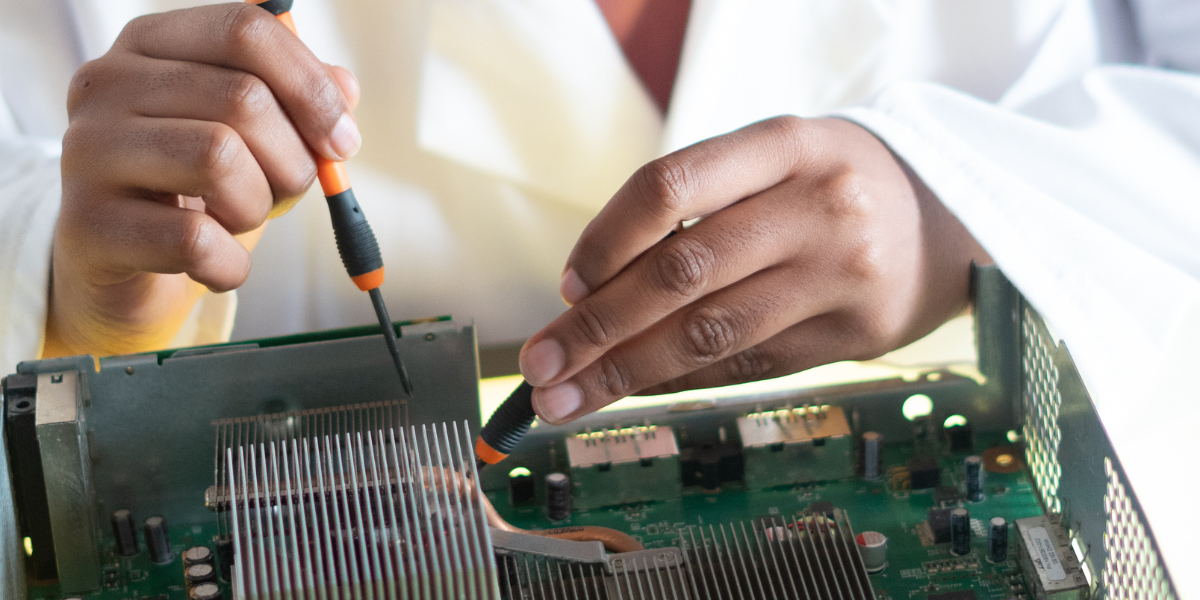
Effective electrical technicians don't fix symptoms; they find causes. Root cause analysis is the process of identifying the root cause of a problem rather than solving the symptom. A breaker has tripped, and it's a signal. The issue is a cause of overload, short, or ground fault. With this habit in place, there will never be repeated failures, and a technician's reputation will be built for reliability.
➥ Method of Elimination
Good diagnostic work is structured elimination. A trained technician tests hypotheses in a logical sequence: Isolate sections of a circuit, check power supply, check continuity, etc., rather than pulling components at random. This method speeds up the diagnosis by a great deal and presents a low risk of adding new faults during the repair. Electrical technology training instills this habit from the beginning and creates technicians who are faster, safer, and more confident when they encounter an unfamiliar situation.
➥ Reading Schematics
If a technician isn't able to read a schematic, then he is taking a chance. Electrical systems have a language, schematics, and they are a representation of how a system should act; that's the only way to determine if it's actually acting that way. Strong electrical technology training programs invest significant time in schematic reading and ladder logic interpretation, because these skills underpin every other diagnostic capability.
2. Scenario-Based Learning
➥ Simulations
Controlled fault simulations allow students to work through realistic diagnostic problems before they encounter them on a live job site. In the laboratory, a student with a successful diagnosis of a simulated 3-phase motor fault will carry this practical experience in the form of a hands-on problem-solving approach to their first commercial job, rather than just theory. That's the reason why the very best electrician trade school programs always incorporate simulation laboratories into their core curriculum.
➥ Hands-On Adaptations
Simulations build a foundation. Real hands-on lab work builds competence. Real wire panels, real conduit, real conductors, and real circuits with real power under teacher supervision give students hands-on skills that can't be taught in the classroom. Coastal Technical Institute designs its programs around this principle: The real learning takes place in the lab.
3. Fostering Critical Thinking & Adaptability
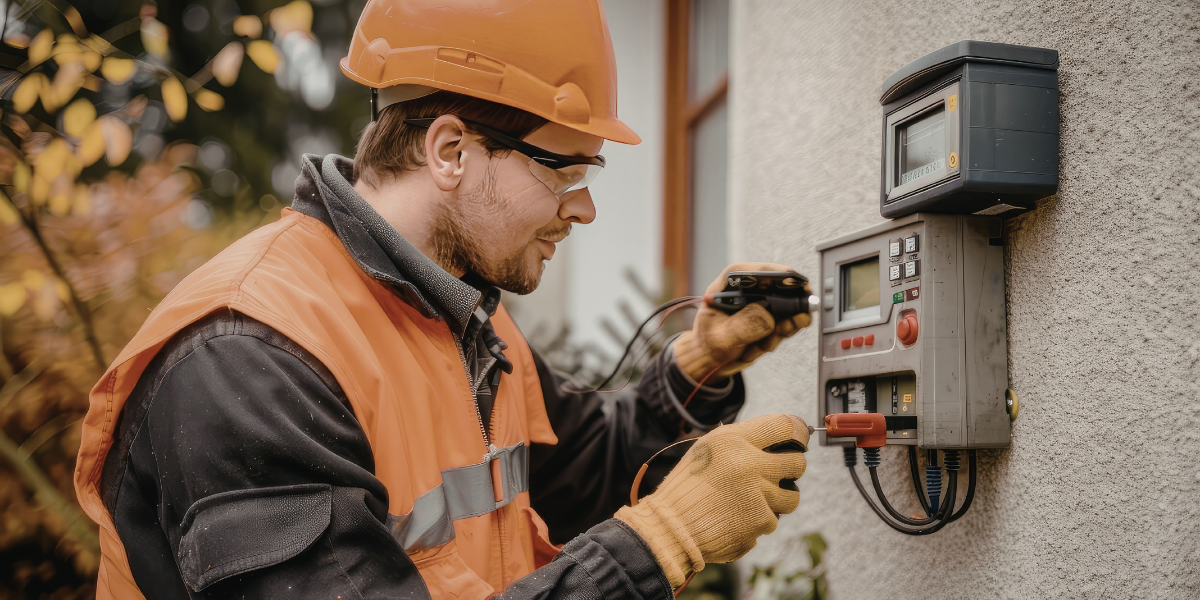
An electrical trade is a field where adaptable individuals are rewarded. Laws for local use differ from jurisdiction to jurisdiction. Equipment models change. The scope of the trade is expanding annually as new technologies are added: EV charging, solar integration, smart building systems, and more.
The technicians with critical thinking ability adjust to changes more quickly than those with strict procedures. They formulate better questions, recognize variables, and use basic principles on new equipment.
The flexibility is what makes the difference between a technician who has a long and lucrative career and one who is rendered obsolete by changing technology. Another one of the most neglected reasons is that choosing the right electrician apprentice program or electrical certificate course early in your career has compounding returns over time.
4. Translation to Career Success
➥ Independence
Employers don't want to supervise experienced technicians through every service call. They desire to put them out on their own and have faith in the outcome. Technicians who have been trained to diagnose and resolve problems systematically earn that trust faster, and the faster you earn it, the faster your responsibilities and compensation grow.
➥ Efficiency
Time is money in all job sites. A technician who fixes a fault in half an hour is more valuable than a technician who fixes the same fault in three hours. One of the most valuable skills for hiring electrical contractors is their efficiency in diagnosis, as it directly translates to revenues for their service.
➥ Safety
In an electrical environment, each diagnostic error is a potential physical hazard. Systematic training not only makes technicians more effective, but it also makes them safer. The skills of checking for lockout/tagout, checking for live voltage before approaching conductors, and testing for isolation before working on an isolated circuit are learned skills. They aren't improvised on the job.
How to Choose a Program That Prioritizes Logical Skill Development (Coastal Technical Institute)
All of the electrician trade schools do not produce the same results. Here are some of the signs you should check for.
➥ Hands-On Lab Ratios Over Lecture Slates
If a program consists primarily of slides, recorded videos, and computer-based simulations, students are missing the most important dimension of electrical education: physical, tactile practice under real conditions. Look for programs that spend the majority of instructional time in a working lab environment, not a classroom. This is no mere detail; the hands-on ratio is the first indicator of whether graduates can function without assistance on their first day.
If you've been looking for an electrical technician school near me and you find that it offers a lot of lecture work, then you have to continue your search. Whether you're enrolling in a standalone electrical certificate course or a longer electrician apprentice program, hands-on training is non-negotiable for this trade.
➥ Industry Standards Framework
There is no better way to know that a program's curriculum is directly related to the employability of its graduates than to be aligned with a known competency framework, such as NCCER (National Center for Construction Education and Research). NCCER-aligned programs provide instruction to the same standards that industry-leading electrical contractors use to assess their new hires, so graduates are speaking in the "language of work" from the first day.
When comparing any electrician trade school, make sure to ask them if their programs are taught under the NCCER program and whether the school has active relationships with local hiring partners. Coastal Technical Institute structures its electrical technology training around these industry benchmarks, so students' work is directly applicable to the work site.
➥ Personality Check
This fact is worth acknowledging honestly: the electrical trade naturally rewards a specific type of mind. Methodical thinkers. People who are comfortable with math. Professionals who find satisfaction in logical progression and precise execution. If that description fits you, structured electrical technology training isn't just a career path; it's an environment where your natural tendencies become genuine competitive advantages.
Conclusion
The electrical industry is not just about strong hands. Requires good, disciplined minds capable of solving new problems, applying foundational principles under pressure, and being able to untangle faults quickly and safely.
Structured electrical technology training establishes the base for the diagnostic skills needed to become an indispensable expert. This is because whether you are taking a basic electrical certificate course, joining an electrician apprenticeship program, or choosing to switch from another electrician trade school that just wasn't working for you, your career takes off from the bottom based on your initial training.
The most successful technicians in their careers and the fastest-moving are not necessarily the ones who learned the most procedures. They're the ones who learned how to think.
If you're ready to develop your technical mind and launch a high-demand career, we offer a hands-on electrical technology program built around the skills that actually drive career success. Visit our website to explore the program and take the first step toward setting yourself apart on the job site.


Innovation
Fresh, creative learning environment.

Integrity
Honesty and transparency.

Excellence
Top-notch Instructors.
FOLLOW US


COASTAL TECHNICAL INSTITUTE
STUDENT CARE
PROGRAMS
Trades
Licensed and Approved by:
Coastal Technical Institute (Formerly Brevard Nursing Academy) is licensed by the Commission for Independent Education (CIE), License number 5973, and approved by the Florida Board of Nursing (BON). Additional information regarding this institution may be obtained by contacting the Commission at 325 West Gaines Street, Suite 1414, Tallahassee, FL 32399-0400,
Toll-free telephone number (888) 224-6684.
Copyright 2026. Coastal Technical Institute. All Rights Reserved.