Blog
Invest in your future—with flexible options.
Electrical Training With No Experience: Safe Beginner Wiring Steps | Coastal Technical Institute
If you’ve been Googling “electrician school near me”, “electrician trade school near me”, or “electrical classes near me” and you’re worried you’re starting too late or starting with no experience, let’s clear the air: beginner-friendly electrical training is built for people exactly like you.
At Coastal Technical Institute, the Electrical Technology Program is designed to take you from “I’ve never held tools” to confidently practising real-world skills in a structured, supervised environment. This isn’t about guessing, winging it, or jumping straight into risky work. It’s about learning the right process, especially safety, then building skills step by step through hands-on lab time.
If you’re looking for Electrical Trade Training in Palm Bay, FL and want a clear picture of what beginner electrical training actually looks like, here’s the roadmap.
Why Electrical Training Is Beginner-Friendly (Even If You’ve Never Held Tools)

A solid electrician trade school doesn’t assume you grew up doing home repairs or working construction. It assumes you’re new and it teaches you from the ground up with structure, repetition, and safety-first habits.
That’s why so many students search for electrician programs near me or choose programs that emphasize lab-based learning, small class support, and instructors with real field experience.
At Coastal, the Electrical Technology Program is positioned to prepare students for work across residential and commercial settings, with training that includes electrical theory & safety, wiring installation, reading blueprints and schematics, NEC code compliance, and tools, meters, circuits & troubleshooting.
What “no experience” really means in an Electrical Technology Program
In an electrical technology program, “no experience” usually means:
You don’t know electrical terminology yet (voltage, current, resistance, circuits)
You haven’t used trade tools (strippers, cutters, pliers, meters)
You don’t know how electricians work safely (de-energizing, verifying, lockout habits)
You haven’t read a schematic, blueprint, or NEC-related instruction before
That’s not a disadvantage, it’s simply your starting point. A good electrician trade school sets up training so beginners can build confidence without taking unsafe shortcuts.
The 3 skills beginners build first (safety habits, tool handling, basic circuits)
Most beginners build three foundational skill sets early because they unlock everything else:
Safety habits you follow automatically (not only when someone is watching)
Tool handling that’s controlled and repeatable (not trial-and-error)
Basic circuits, so wiring starts to make sense, not feel like memorization
These fundamentals are also what help students succeed later in an electrician apprentice program, where employers expect you to follow safety rules and work cleanly from day one.
Step 1: Learn Electrical Safety Before You Touch a Wire

Before wiring ever becomes “hands-on,” it becomes “safety-on.” That’s true across reputable programs whether you’re in-person at an electrician trade school or starting with electrician training online as a supplement.
Electrical work rewards confidence, but it demands discipline. Training starts by teaching you how to work safely, how to reduce risk, and how to avoid the common beginner mistakes that cause shocks and injuries.
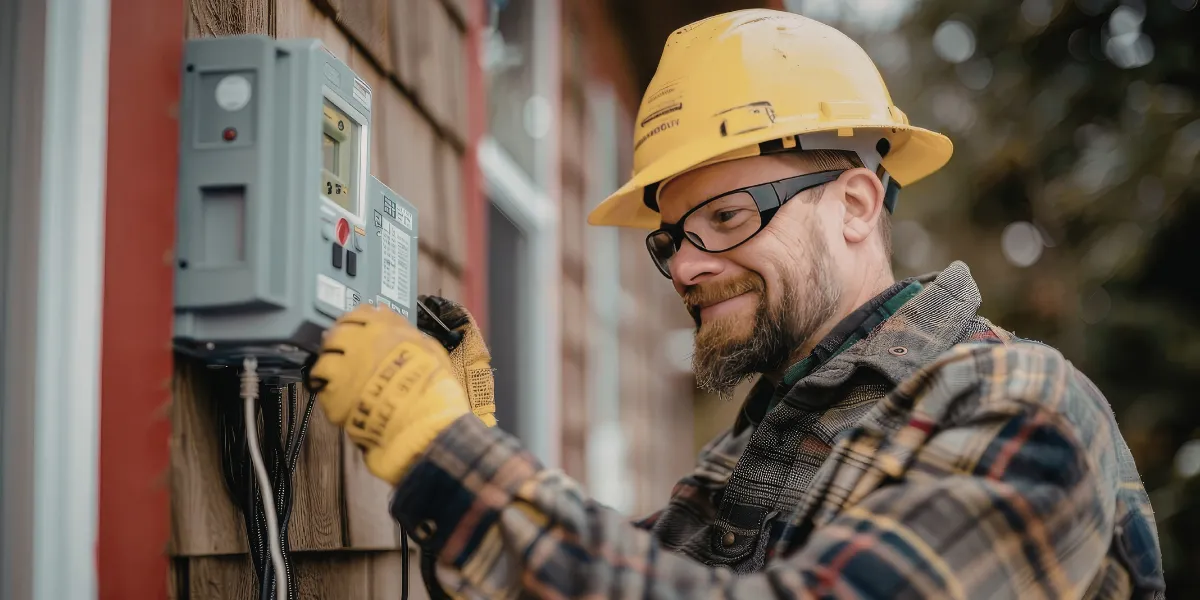
PPE basics (what students wear and why)
In an electrician trade school near me, PPE isn’t a formality; it’s part of learning the trade correctly.
Depending on the task, students typically learn when and why to use:
Eye protection (because cutting, stripping, and trimming can create debris)
Appropriate work clothing (to reduce snagging and exposure)
Task-appropriate gloves and footwear (for protection and stable footing)
You’ll also learn that PPE is not a substitute for correct procedure. It’s one layer of protection, not “permission to be risky.”
What “de-energizing” means and why it’s non-negotiable
De-energizing means ensuring a circuit is not live before you work on it and proving it through correct steps. In real electrical work, “I’m pretty sure it’s off” is not enough.
Beginner training reinforces a simple mindset: don’t assume, verify. That habit carries directly into any future electrician apprentice program and is equally emphasized in an electrical apprenticeship program online curriculum, where safety procedures are taught as standard practice.
Common beginner mistakes that cause shocks (and how training prevents them)
Most beginner mistakes come from rushing or guessing. Common issues include:
Working on something you believe is off without confirming
Touching exposed copper or terminals without awareness
Using tools incorrectly (slips, poor stripping technique, nicked wire)
Creating messy work that hides hazards (stray strands, loose terminations)
Good programs prevent these with instructor demos, supervised lab work, and built-in corrections early before bad habits become permanent.
Step 2: Understand the Basics: Voltage, Current, Resistance

You don’t need an engineering background to become an electrician. But you do need electrical fundamentals explained clearly because that’s what keeps your work safe and makes troubleshooting possible.
Students sometimes compare training paths like electrical engineering online courses or even an electrical technology degree online, but the advantage of hands-on trade training is that the theory is taught with an immediate practical context. You learn what matters on the job and then practice it.
Simple definitions beginners can remember
Here are beginner-friendly definitions that match what you’ll actually use:
Voltage (V): the push that drives electricity
Current (A): the flow of electricity
Resistance (Ω): what slows the flow down
You might see similar explanations in electrical engineering online courses or study materials for electrician certification online, but the key is connecting the definitions to real tasks instead of leaving them abstract.
How these basics connect to real wiring tasks
These fundamentals show up constantly in the lab and in the field:
If something won’t power on, you check for proper voltage
If protection trips repeatedly, you consider excessive current or a fault condition
If a connection heats up or behaves inconsistently, resistance and connection quality may be the problem
This is where beginners start “thinking like techs,” which is the real goal, not memorizing terms.
Step 3: Get Comfortable With the Core Tools (Without Guessing)

A lot of new students worry they’ll be judged for not knowing tools. In reality, strong electrician courses near me expect beginners and teach tools carefully because tool use is tied directly to safety and quality.
Even if you’re using online electrician training resources outside of class, the safest way to learn hands-on tool skills is with instructor oversight and repetition in a lab environment.
Hand tools students learn first (strippers, cutters, screwdrivers, pliers)
Most training begins with the daily tools electricians rely on:
Wire strippers (removing insulation cleanly without nicking conductors)
Cutters (clean cuts lead to clean terminations)
Screwdrivers/nut drivers (proper tightening technique matters)
Pliers (grip, bend, and control conductors safely)
In an electrician trade school, you learn technique first, speed later. That prevents mistakes that can cause failures, heat, and hazards.
Meter basics: how beginners learn to test safely
Meters are powerful, but only when used correctly. Beginner training focuses on safe testing habits so you don’t “poke and hope.” You’ll learn:
What settings mean (voltage, continuity, resistance)
How to set up leads correctly
How to verify results and avoid unsafe testing behaviour
These skills translate well to apprenticeship expectations, and they support the same “test-first” discipline you’ll see in an electrical apprenticeship program online framework.
What to practice at home vs what should only happen in the lab
Some practice can happen safely at home; some shouldn’t.
Good at-home practice can include:
Studying symbols and basic wiring diagrams
Practicing stripping and cutting on scrap wire (with safe handling)
Reviewing theory concepts (similar to electrician certification online prep)
Lab-only tasks include:
Energized testing and troubleshooting
Anything involving panels, live circuits, or complex setups
When in doubt, we keep it simple: home for theory and low-risk reps; lab for real electrical scenarios.
Step 4: Learn Wiring Fundamentals: Circuits, Connections, and Clean Work

This is where training becomes visibly “electrical.” You move from concepts into wiring fundamentals that apply across residential and commercial work.
At Coastal’s Electrical Technology Program, the curriculum highlights wiring installation (residential & commercial), NEC code compliance, and reading blueprints and schematics, all core requirements for doing professional-grade work.
Hot/neutral/ground explained for beginners
Understanding conductor roles is foundational:
Hot carries voltage from the source
Neutral completes the circuit back
Ground provides a safety path in fault conditions
In the beginning, this helps you wire correctly. Later, it helps you troubleshoot faster because you understand what each conductor is supposed to do.
Making secure connections (torque, terminations, wire management)
Most real-world electrical problems come down to connection quality. Training emphasizes:
Proper stripping length and clean terminations
Secure connections (not loose, not damaged)
Organized wire routing and management
Clean, secure work supports safety and reduces callbacks. It also makes inspection and troubleshooting much easier.
Why neat work is safer work (and impresses employers)
Neat work isn’t “extra.” It’s a safety signal.
It’s easier to inspect
Easier to trace
Less likely to hide hazards
More likely to reflect professional standards
Employers notice this quickly, especially when hiring entry-level apprentices.
Step 5: Build Real Skills in Lab: From Simple Circuits to Practical Scenarios

If you’re comparing electrician programs near me, this is the section that should influence your decision the most: lab time. Hands-on practice is where beginners turn knowledge into ability.
Coastal highlights an industry-standard electrical lab, small class sizes, and experienced instructors who’ve worked in the field, which typically translates to more feedback, more reps, and faster skill development.
How instructor demos + practice reps work
A common learning pattern looks like:
The instructor explains the task and safety checkpoints
Instructor demonstrates correct technique
Students repeat the task (multiple reps)
Instructor corrects mistakes early before they become habits
That loop is how beginners gain real confidence, not just theoretical understanding.
Why hands-on lab time matters more than watching videos
Videos are helpful, especially for review, and many students use online electrician training or general electrical engineering online courses to reinforce concepts.
But hands-on lab time teaches what videos can’t:
The feel of a correct termination
The discipline of testing before touching
The reality of troubleshooting when something doesn’t work
The importance of clean, code-aware wiring
Skill checks: how schools track progress and correct mistakes early
Skill checks help verify that you can:
Follow safety procedures consistently
Use tools properly
Build circuits that work correctly
Troubleshoot using a process (not guessing)
For beginners, this matters because feedback prevents “practicing mistakes.”
Step 6: Learn Troubleshooting the Right Way (A Beginner Process That Works)

Troubleshooting is where beginners become technicians.
If you’ve ever looked into an electronic technician course, electronic technician training, or electronic technician certification online, you’ve seen the same core principle: start with a process. Electrical troubleshooting works the same way.
The “don’t guess” rule: test → confirm → fix
Here’s the beginner-friendly method:
Test the condition
Confirm the cause
Fix the fault
Re-test to verify the repair and safety
This reduces risk and builds confidence because you’re making decisions based on evidence.
Common training faults (open circuit, short, bad connection)
Training labs often include common fault scenarios such as:
Open circuits (a break in the path)
Short circuits (unintended connection)
Bad connections (loose or poorly made terminations)
These are common in real work too, so learning them early is a huge advantage.
How beginners learn to think like techs
Thinking like a tech means:
You don’t rush
You don’t guess
You isolate the problem step by step
You verify before and after
That mindset is what helps you succeed in the field and in an apprenticeship environment.
Step 7: What to Expect in Your First Week of Electrical Training in Palm Bay

If you’re starting Electrical Trade Training in Palm Bay, your first week is designed to create safety habits and baseline confidence, not throw you into advanced wiring.
A typical routine includes safety briefings, instructor demos, lab practice, and cleanup/reset (a professional habit, not busywork). You’ll likely find some parts challenging at first, tool handling and step order, but repetition makes the basics click quickly.
Beginner success usually comes down to three things:
Strong attendance
Asking questions early
Repeating the fundamentals until they’re automatic
Is Electrical Technology Right for You? (Quick Fit Check)
Electrical is a great fit if you like problem-solving and working with systems. It’s also ideal if you prefer hands-on work with precision and safety rules.
If you’re comparing paths like an electrical engineering trade school-style program, electrical engineering technology, or even an electrical technology degree online, ask yourself whether you want most of your learning to be hands-on in a lab (trade training) or mostly theory-based (more academic routes). For most aspiring electricians, hands-on training is the fastest way to build job-ready skills.
Explore Skilled Trades at Coastal Technical Institute (Palm Bay, FL)
If you’re ready to move from searching “electrician trade school” to taking action, Coastal Technical Institute offers training in Palm Bay with career-focused support.
Contact us to explore our Electrical Technology Program.
FAQ’s
Can I start electrical training with no experience?
Yes. A beginner-focused electrician trade school is designed to teach you safety, tools, and basic circuits first, then build into wiring installs and troubleshooting.
Is electrical training dangerous for beginners?
It can be if you don’t learn proper procedures. The right program reduces risk through safety-first instruction, supervised labs, and consistent testing habits.
What tools do I need as a student?
Tool requirements can differ quite a bit. Most programs will give you a heads-up on what you need to buy and what’s already available in the lab. It’s a good idea to check in with admissions for the latest tool list and what’s expected of you.
How do I choose between HVAC, Electrical, and Welding?
Electrical is a great choice for those who love wiring and figuring out how systems work. If you’re more into diagnostics and working with mechanical equipment, HVAC is a fantastic option. And for those who enjoy creating and building things, welding is just right for you!
Can I visit Coastal Technical Institute before enrolling?
Yes, scheduling a tour is one of the best ways to see the labs and understand the day-to-day training environment.


Innovation
Fresh, creative learning environment.

Integrity
Honesty and transparency.

Excellence
Top-notch Instructors.

FOLLOW US


COASTAL TECHNICAL INSTITUTE
STUDENT CARE
PROGRAMS
Trades
Licensed and Approved by:
Coastal Technical Institute (Formerly Brevard Nursing Academy) is licensed by the Commission for Independent Education (CIE), License number 5973, and approved by the Florida Board of Nursing (BON). Additional information regarding this institution may be obtained by contacting the Commission at 325 West Gaines Street, Suite 1414, Tallahassee, FL 32399-0400,
Toll-free telephone number (888) 224-6684.
Copyright 2026. Coastal Technical Institute. All Rights Reserved.