
Blog
Invest in your future—with flexible options.

Is HVAC a Good Career in Florida? Salary & Job Outlook
In Florida, a failed air-conditioning system can disrupt a home, school, medical office, restaurant, hotel, or workplace within hours. Cooling, ventilation, humidity control, and refrigeration are everyday needs across the state, especially during long periods of heat.
So, is this a practical career choice? For many people, yes. The field can offer steady demand, competitive wage potential, varied settings, and a training route without a four-year degree. Results still differ. Earnings and job satisfaction depend on training, credentials, experience, specialization, location, customer-service skills, and comfort with physically demanding conditions.
At Coastal Technical Institute, we help students explore practical career paths based on their goals, strengths, and preferred learning style. This guide reviews salary data, employment projections, duties, advancement, certification, and the realities of an HVAC technician career.
Is HVAC a good career in Florida? The quick answer

Yes, it can be a strong choice for someone who wants an essential, technical, hands-on occupation. Florida’s reliance on cooling systems, projected growth, and range of residential and commercial work make the field worth considering.
The trade also has real challenges. A technician may work in hot attics, tight mechanical rooms, outdoor locations, or on rooftops. The job can involve lifting, kneeling, driving, customer communication, and busy seasonal schedules. A good HVAC career fit depends on whether your interests, physical abilities, training plans, and income expectations match those conditions.
Why Florida creates consistent demand for HVAC technicians
Florida’s demand reflects how people live and businesses operate. Air-conditioning systems run for long stretches, while humidity control affects comfort and equipment performance. Regular use creates recurring inspection, maintenance, repair, replacement, and upgrade needs.
Cooling systems support homes and commercial properties
An HVAC technician may work in houses, apartment communities, schools, healthcare facilities, hotels, restaurants, offices, stores, warehouses, or industrial buildings. Roles may focus on residential service, commercial refrigeration, preventive maintenance, controls, or large systems.
The work extends beyond failed units. Technicians may test airflow, inspect electrical components, find refrigerant problems, replace worn parts, clean equipment, verify thermostat operation, and explain maintenance recommendations. That range creates several ways to build an HVAC technician career.
Construction, replacement, and efficiency upgrades support demand
New residential and commercial construction creates installation work. Existing buildings also need aging equipment repaired or replaced. As systems become more sophisticated, employers may seek workers who understand diagnostics, electronic controls, ventilation, and efficiency upgrades.
Career One Stop projects Florida employment for heating, air-conditioning, and refrigeration mechanics and installers to rise from 36,880 workers in 2022 to 43,120 in 2032. That represents 17 percent growth and about 3,940 projected openings each year. Nationally, the Bureau of Labor Statistics projects 8 percent growth from 2024 through 2034, faster than the average for all occupations.
HVAC technician salary in Florida: What could you earn?
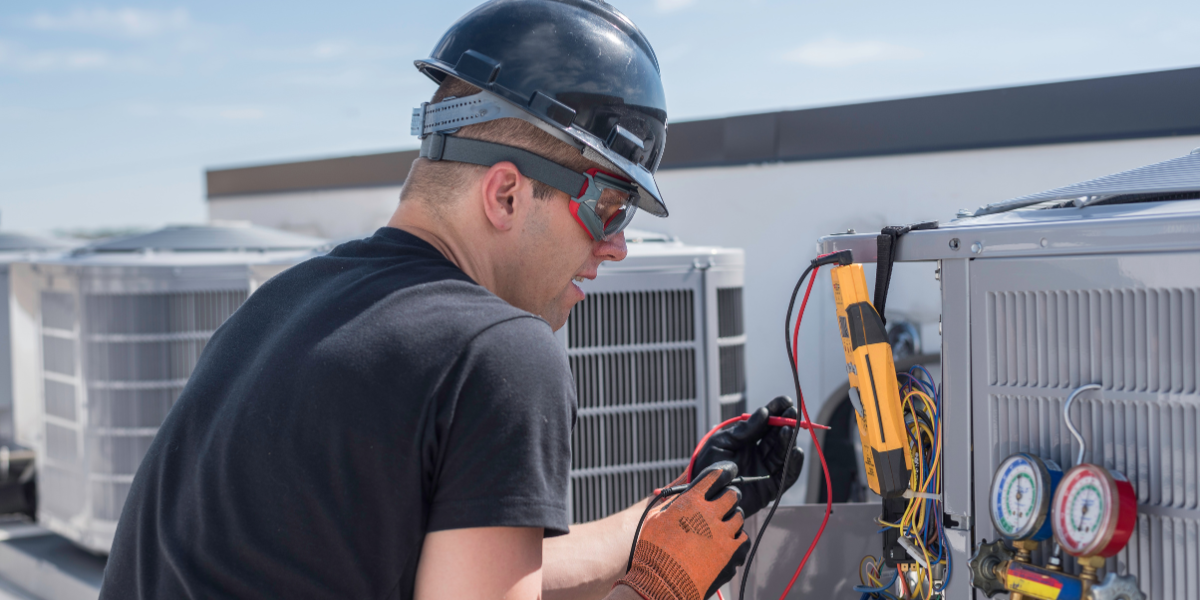
Current wage data is a useful benchmark, not a promise. CareerOneStop’s May 2025 figures show a Florida low wage estimate of $18.45 per hour, a median of $27.24, and a high estimate of $37.60. Annual equivalents are approximately $38,370, $56,670, and $78,210.
The median is the midpoint of the wage distribution. Half of workers earn above it and half earn below it. An average instead divides total wages by the number of workers. Starting pay may be lower while a new HVAC technician develops speed, judgment, and independence.
Palm Bay and Brevard County salary context
For the Palm Bay-Melbourne-Titusville metropolitan area, May 2025 wage data lists a median annual figure of about $57,240. The reported local range is roughly $37,470 to $78,460. These numbers describe occupational wage levels across the area, not guaranteed offers for graduates.
Offers vary by employer, schedule, experience, credentials, and whether work involves service, installation, refrigeration, or controls. Overtime and emergency calls can affect total earnings, but they also change work-life expectations.
What influences an HVAC technician’s earnings?
Experience is only one factor. Pay may reflect technical accuracy, communication, electrical knowledge, troubleshooting, safety, and readiness for varied assignments. Additional HVAC certification, including EPA Section 608 where required, may support access to certain responsibilities.
Specialization can also matter. Commercial refrigeration, controls, building automation, estimating, technical sales, and supervisory work may require added knowledge. Over time, some workers move into lead technician, field supervisor, service manager, project coordinator, trainer, or business roles.
What does an HVAC technician actually do?
The occupation combines technical work, problem-solving, records, and customer interaction. Before choosing an HVAC technician course, it helps to picture a typical day rather than focusing only on salary.
Common responsibilities
Technicians inspect, test, install, maintain, and repair heating, cooling, ventilation, and refrigeration systems. They may work with compressors, motors, electrical wiring, thermostats, controls, ductwork, airflow, coils, and refrigeration cycles. When a system fails, the technician identifies the cause and chooses adjustment, repair, or replacement.
Communication matters too. Customers need clear explanations of the problem, repair, and preventive steps. Technicians also complete service records, follow safety procedures, and manage tools and materials. Strong HVAC technician training should connect classroom concepts with repeated hands-on practice.
Work environment and schedule
Work locations change. A call may involve a mechanical room, outdoor unit, attic, rooftop, or confined area. Technicians may climb, kneel, lift components, carry equipment, and drive between sites. Florida heat can make an already physical task harder.
Schedules can include evenings, weekends, overtime, or emergency calls. Peak cooling periods bring heavier workloads. Safety training is essential because workers may encounter electricity, pressurized refrigerants, chemicals, moving machinery, sharp materials, and heavy equipment. Anyone considering an HVAC career should evaluate these realities honestly.
HVAC career paths and advancement opportunities

The field includes many job titles. Initial roles may include installation helper, maintenance technician, residential service technician, refrigeration technician, or commercial service support. With experience, workers may develop a specialty in diagnostics, indoor air quality, duct systems, commercial refrigeration, ventilation, controls, or building automation. Some move into lead roles, estimating, project coordination, technical sales, equipment support, or instruction.
A realistic progression may look like this: structured training, entry-level employment, supervised field experience, added credentials or specialization, and then broader responsibility. Advancement depends on skill, reliability, communication, employer needs, and continued learning. Some experienced workers eventually consider operating a business. Florida contractor licensing rules apply when someone contracts for qualifying work. That step is separate from an entry-level technician credential.
What training and certification do Florida HVAC technicians need?
Training routes include technical school, community college, apprenticeship, or employer-based instruction. Each has advantages. A structured HVAC technician school can provide planned lessons, laboratory practice, instructor feedback, and exposure to multiple systems before a student enters the field.
Common training pathways
Technical programs may cover refrigeration, electricity, motors, controls, ductwork, safety, diagnostics, heating, and commercial equipment. Apprenticeships combine paid field experience with related instruction, though availability and duration vary. Employer training provides company-specific exposure, though depth varies. Community-college HVAC technician programs may offer certificates or degrees with a broader academic structure.
Look beyond the program name. Ask how much laboratory time is included, which equipment students use, how troubleshooting is taught, whether safety is embedded throughout the curriculum, and how the school supports career preparation.
EPA Section 608 certification
EPA Section 608 certification is required for technicians who maintain, service, repair, or dispose of equipment in ways that could release regulated refrigerants. EPA recognizes Type I, Type II, Type III, and Universal credentials. The certification does not expire.
Apprentices may work without certification when they are closely and continually supervised by a certified technician, as allowed by EPA rules. Exam preparation matters because refrigerant handling is central to air-conditioning and refrigeration work.
Technician certification is different from contractor licensing
Federal certification and Florida contractor licensing serve different purposes. Florida identifies Class A and Class B certified air-conditioning contractor licenses for people who contract for qualifying work. Class A has a broader scope, while Class B is limited by system capacity.
An entry-level employee does not automatically need to hold a contractor license simply to begin working under an employer. Requirements depend on role, work scope, employment, and business plans. Students should review current EPA and Florida Department of Business and Professional Regulation information for their intended path.
Is an HVAC career right for you? A practical checklist
This trade may suit people who enjoy tools, mechanical or electrical problems, hands-on learning, and changing locations. It also helps to be comfortable speaking with customers and explaining technical issues in plain language.
Think carefully if you strongly prefer predictable desk work, dislike heat or confined spaces, cannot manage physical activity, or need a fixed schedule with no possibility of emergency calls. Those preferences simply affect fit.
Rate yourself from one to five in these areas: mechanical problem-solving, comfort with tools, physical readiness, customer communication, schedule flexibility, and willingness to keep learning. Low scores show what to investigate before enrolling in an HVAC technician course.
A sound decision combines wage research with daily-work realities. Shadowing a technician, speaking with instructors, touring a lab, and asking employers about entry-level expectations can reveal details a salary chart cannot.
How Coastal Technical Institute helps you prepare

At Coastal Technical Institute, we build practical entry-level skills through classroom instruction and hands-on training. Our HVAC Technician Training Program is designed for students who want a focused pathway in Palm Bay, Florida.
What students learn in our program
The curriculum covers residential and commercial air-conditioning systems, refrigeration theory, applied heating, electrical systems, motors and controls, system design, and commercial refrigeration. Students practice equipment operation, troubleshooting, repair, refrigerant procedures, and safety.
Our course catalog lists the HVAC Technology diploma at 36 weeks and 600 clock hours. The program also includes career preparation and EPA recovery and charging procedures. Program schedules, costs, and requirements can change, so applicants should confirm current information with admissions. That conversation should cover attendance expectations, lab access, class timing, certification preparation, tools, tuition, payment plans, career services, and the amount of independent study students may need outside scheduled instruction before enrollment decisions are finally made.
Why students choose Coastal Technical Institute
Students may value hands-on instruction, instructor access, day and evening options, and our Palm Bay location. Our career-support resources include résumé and interview preparation, while admissions can explain current payment-plan information.
A good HVAC technician school should teach technical material and workplace expectations. We focus on practical entry-level preparation, repeated skill development, and clear guidance about the next step. Prospective students can also review our HVAC trade school information or contact Coastal Technical Institute to request details and schedule a campus tour.
Conclusion
HVAC can be a practical Florida career for people who enjoy technical problem-solving, hands-on work, and serving an essential need. State projections, current wages, varied settings, and advancement paths make the occupation worth exploring.
Income and progress still vary by employer, experience, credentials, specialization, and location. Research the work environment as carefully as salary figures. A campus visit can also help you compare the learning environment, equipment, schedule, instructor access, and support available before making an enrollment decision with confidence. At Coastal Technical Institute, we can help you understand our training format, class schedule, curriculum, and enrollment process. Review the program, speak with an admissions advisor, and decide whether this path fits the way you want to learn and work. Contact us at Coastal Technical Institute to learn more about the program and enrollment process.
Frequently asked questions about HVAC careers in Florida
Is HVAC a good career in Florida?
Yes, it can be a good option for people who enjoy technical, hands-on work. Florida employment is projected to grow by 17 percent from 2022 to 2032, with approximately 3,940 openings projected annually. Individual outcomes depend on training, skills, experience, employer needs, and location.
How much does an HVAC technician make in Florida?
May 2025 wage data lists a Florida median of approximately $56,670 per year. The reported statewide range is about $38,370 at the lower end and $78,210 at the higher end. These are occupational wage estimates, not guaranteed starting salaries.
How long does HVAC technician training take?
Training timelines vary by institution, credential, schedule, and learning route. Postsecondary programs may last from six months to two years. Coastal Technical Institute currently lists its HVAC Technology program at 36 weeks and 600 clock hours. Applicants should confirm current schedules with admissions.
Do HVAC technicians need certification in Florida?
EPA Section 608 certification is required for technicians whose work could release regulated refrigerants. This federal credential is separate from Florida air-conditioning contractor licensing. The exact requirements depend on the work being performed and the technician’s role.
Can I begin an HVAC technician course without previous experience?
Many career-focused programs begin with foundational material before progressing to electrical systems, refrigeration, diagnostics, and hands-on troubleshooting. Applicants should contact Coastal Technical Institute to confirm current admissions requirements and determine whether the program fits their background.


Innovation
Fresh, creative learning environment.

Integrity
Honesty and transparency.

Excellence
Top-notch Instructors.

FOLLOW US


COASTAL TECHNICAL INSTITUTE
STUDENT CARE
PROGRAMS
Trades
Licensed and Approved by:
Coastal Technical Institute (Formerly Brevard Nursing Academy) is licensed by the Commission for Independent Education (CIE), License number 5973, and approved by the Florida Board of Nursing (BON). Additional information regarding this institution may be obtained by contacting the Commission at 325 West Gaines Street, Suite 1414, Tallahassee, FL 32399-0400,
Toll-free telephone number (888) 224-6684.
Copyright 2026. Coastal Technical Institute. All Rights Reserved.