Why Florida AC Problems Make HVAC Training a Smart Career Choice in Palm Bay
In Palm Bay, a broken air conditioner is not a minor inconvenience; it is an emergency. The heat remains above 90°F for months, the humidity never falls, and when the AC starts to malfunction, it turns a home into an unsafe place within hours. People panic and call technicians, repair costs increase, and wait times stretch for days.
Homeowners are facing a rising repair bill; residents have a direct path into one of the most in-demand skilled trades in the country. Florida's climate is not only detrimental to AC systems, but it also has a constant demand for skilled professionals throughout the year that doesn't slow down during recessions or during an off-season or economic downturn.
For Palm Bay residents who are looking to secure a solid career with excellent pay and a quick route from classroom to paycheck, HVAC training is one of the best choices that you can make.
Florida HVAC technicians trained with quality HVAC training know the common problems that can occur in the state, such as salt corrosion problems, refrigerant leaks, and much more, and employers in Brevard County are actively seeking technicians with local knowledge.
This blog explains exactly why Florida's environment destroys AC systems, how that translates into career opportunities, and why Coastal Technical Institute is the right place for Palm Bay residents to start.
The "Florida Factor": Why AC Units Fail Faster in the Sunshine State
Florida is not only hot, but it is also mechanically unfriendly to air conditioning systems. Several climate-specific conditions combine to push AC failures far beyond what happens anywhere else in the country, and Palm Bay sits directly in the path of most of them.
Salt Air Corrosion
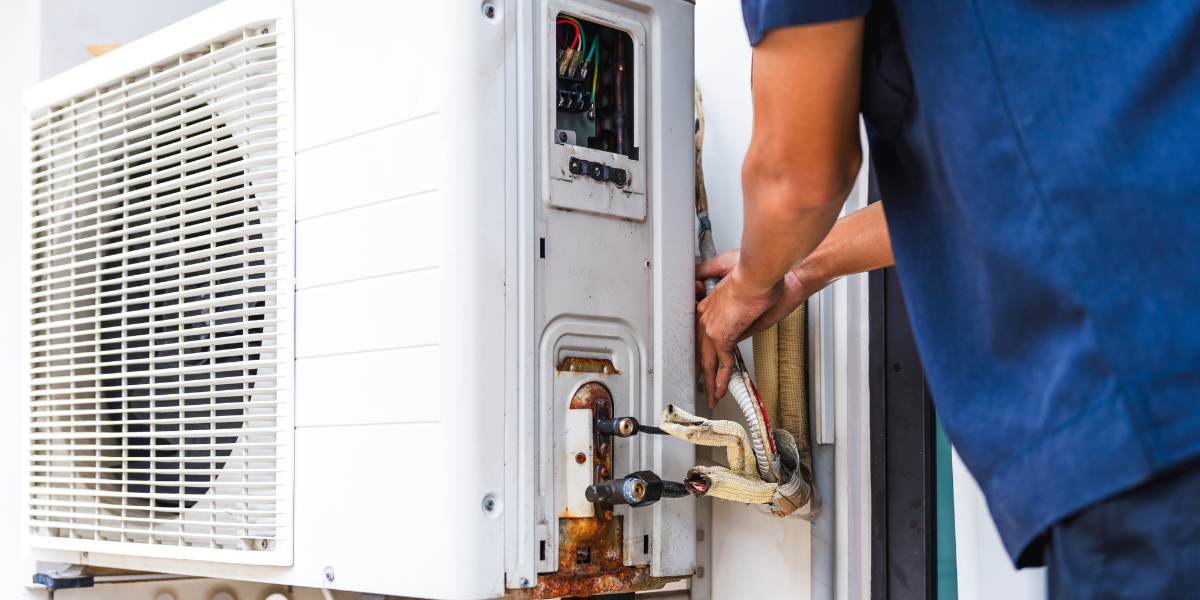
The coastal location of Palm Bay brings salt in the air to the city every day. The tiny particles of salt stick to the aluminum fins and copper coils and cause a gradual chemical reaction. Corroded evaporator coils (also known as “fin rot” by technicians) limit airflow, decrease cooling efficiency, and ultimately lead to full system failure if not addressed.
This is mostly an issue in coastal Florida. Technicians in Ohio or Tennessee rarely encounter it. Sorting out the issue of salt corrosion is a common problem that arises when people need repair services in their homes, and any technician who has attended HVAC technician training and knows about salt corrosion is immediately in demand for Brevard County employers.
The Humidity Trap
The relative humidity on average is 74% in Florida. This moisture that exists within an air conditioning system does cause ideal conditions for algae and biological growth, especially within the condensate drain. The number-one most common complaint among all homeowners in the Southeastern United States for needing residential air conditioning repair is a clogged condensate drain line.
The water backs up through the system because a clogged condensate drain line results in water damage to walls and ceilings, along with overflow shutoffs. It's easy and simple for a trained HVAC technician. For a homeowner without one, it becomes an expensive, stressful emergency, and that gap between the problem and the solution is exactly where your career lives.
Year-Round Strain
In northern states, AC systems rest for four to six months each year. In Palm Bay, the majority of the systems are in continuous operation for 10 to 12 months. These constant operations wear out compressors, capacitors, contactors, and fan motors. Failure rates are greater, maintenance periods come more often, and the volume of maintenance calls is many times higher than in any northern market.
In addition to mechanical wear, the year-round operation can accelerate the development of corroded evaporator coils, especially in homes located near the coast. Technicians with the right HVAC training understand how to factor Florida's specific environmental conditions into both diagnostics and long-term maintenance planning.
Storm Season Hazards
Hurricane season is from June through November, and Brevard County is in the path of common hurricanes. Lightning surges damage control boards. The outdoor condenser is damaged by wind-blown debris. Post-storm demand for HVAC service can spike sharply overnight, requiring technicians who can diagnose complex electrical and mechanical failures quickly and safely. That seasonal surge adds consistent, predictable demand to an already high-volume service market.
Why These Problems Create a Recession-Proof Career
Necessity, Not Luxury
In most of the country, air conditioning is a comfort feature. In Florida, it is a health requirement. Elderly residents, young children, and people with respiratory conditions face genuine medical risk when indoor temperatures climb without control. That's why HVAC services are a must-have, regardless of economic conditions.
Homeowners aren't waiting for better financial conditions to call a technician when their AC fails in Palm Bay. They contact the HVAC technician on the same day. This is the very reason why HVAC technician training is a recession-proof job. The demand doesn't disappear when the economy contracts; it remains the same, as it is biological, not discretionary.
The Technician Shortage
The HVAC workforce is aging rapidly. Many of those who have been working in the field of experience for many years are nearing retirement, while there are fewer new technicians being trained. That widening gap is already showing up in higher starting wages, longer job posting durations, and signing incentives across high-demand markets like Brevard County.
Entering the field now through a focused HVAC apprenticeship program or trade school curriculum puts new technicians in a strong position from day one. Employers are currently seeking workers with current HVAC training who have already obtained both their certifications and practical skills.
Changing Refrigerant Regulations
The industry is undergoing a significant regulatory change. The phase-out of the older high-GWP refrigerants has been accelerated in 2025 and 2026, and the industry will need new technical knowledge, which isn't covered by the older certifications.
Those who have already finished a current HVAC trade school course are already familiar with these new refrigerant standards, so they have an advantage over technicians who trained years ago and are now forced to undergo further study at their own expense.
The Career Rewards: Pay, Growth, and Stability
Competitive Salary
In the United States, HVAC technicians make a median salary of approximately $60,000 annually. In Florida, where the length of the season is longer and demand is greater, experienced technicians with an excellent diagnostic ability can command $80,000 to $90,000 or more per year. Income can even reach higher levels during overtime in summer periods when the tides are high or after storms.
That compensation is comparable to many four-year degree careers reached in a fraction of the time, without the associated debt.
Rapid Entry Into the Workforce
With a structured HVAC apprenticeship program or HVAC trade school, a student can be prepared for employment in less than a year, starting with no training and ending with a working HVAC technician. There's no four-year commitment and no general education requirements padding your timeline. You train on the specific skills employers need, earn your certifications, and step into the workforce fast.
Train on the skills your employers need, get your certifications on Florida-specific problems such as corroded evaporator coils and moisture problems, and get to work quickly.
Long-Term Career Security
Hands on career training in a skilled trade produces skills that cannot be automated, outsourced, or eliminated by software. To test for a refrigerant leak, change a broken compressor, or diagnose an intermittent electrical fault, you need to be there and be able to make real-time decisions and have hands-on expertise. No algorithm can do that. Skilled HVAC technicians will remain essential as long as buildings have climate control systems — which in Florida means permanently and without exception.
Rapid Training and Certification
Modern HVAC training programs are structured for efficiency. Students don't spend time on general academic studies but instead focus on the equipment that will be used in their professional careers. That target-oriented model helps develop competence more quickly and earlier, helping students qualify for certification exams before they get stuck in unproductive jobs. The combination of hands on career training and integrated certification prep is what distinguishes trade school graduates who are job-ready from those who still need months of on-the-job catching up.
Why Coastal Technical Institute Is the Best Choice for Palm Bay Residents
Coastal Technical Institute offers HVAC training tailored to Florida market conditions. The curriculum, equipment, and instruction reflect what Palm Bay technicians actually deal with in the field, not a generic national program designed for a different climate.
➜ Hands-On Learning
Our program is conducted in industry-standard labs, using the same systems that are used in homes and commercial properties in Florida. Students learn diagrams on real equipment, and they develop practical confidence that employers can see and test as soon as they finish training. This commitment to hands on career training is the difference between a graduate who understands theory and one who can diagnose a real problem under real pressure in their first week of work.
➜ EPA 608 Certification Training
Federal certification is required for the legal and proper handling of refrigerants. We integrate EPA 608 certification training directly into our HVAC program, so students prepare for and pass the exam before graduation. This certification is a must-have qualification for any HVAC job. When you get EPA 608 certification training as a part of your program, you are hireable with no extra steps, no extra delays, and no gaps between receiving your diploma and your first job offer.
➜ Local Employer Partnerships
Our Ready to Work (RTW) programs are direct links between the graduates and HVAC employers in Palm Bay and across Brevard County. These are active, established relationships with local companies that are currently hiring, not generic job board listings. For HVAC technician training graduates of ours, that network translates to a quicker, easier path from training to a paying job in their community.
➜ Affordability
Our program is designed around career outcomes, not a four-year tuition model. The program is available to students who can afford it carefully, with various financial aid options and flexible payment structures. The program aims to provide graduates with marketable skills, rather than large amounts of debt that will take years to repay.
Conclusion
Florida's climate is relentless. Salt air corrodes evaporator coils; sustained humidity produces clogged condensate drain lines on a routine basis; year-round operation accelerates mechanical wear; and storm season delivers a fresh wave of damage every year. Palm Bay residents face a steady, stable, well-paying job option that has an easy entry path and definite security for the long term because of the cycle of constant AC failures.
HVAC training through a focused, Florida-specific program like the one at Coastal Technical Institute puts you in a position to meet that demand with the right skills, the right certifications, and the right local employer connections from day one.
Schedule your campus tour today and explore the HVAC training program in Palm Bay.
