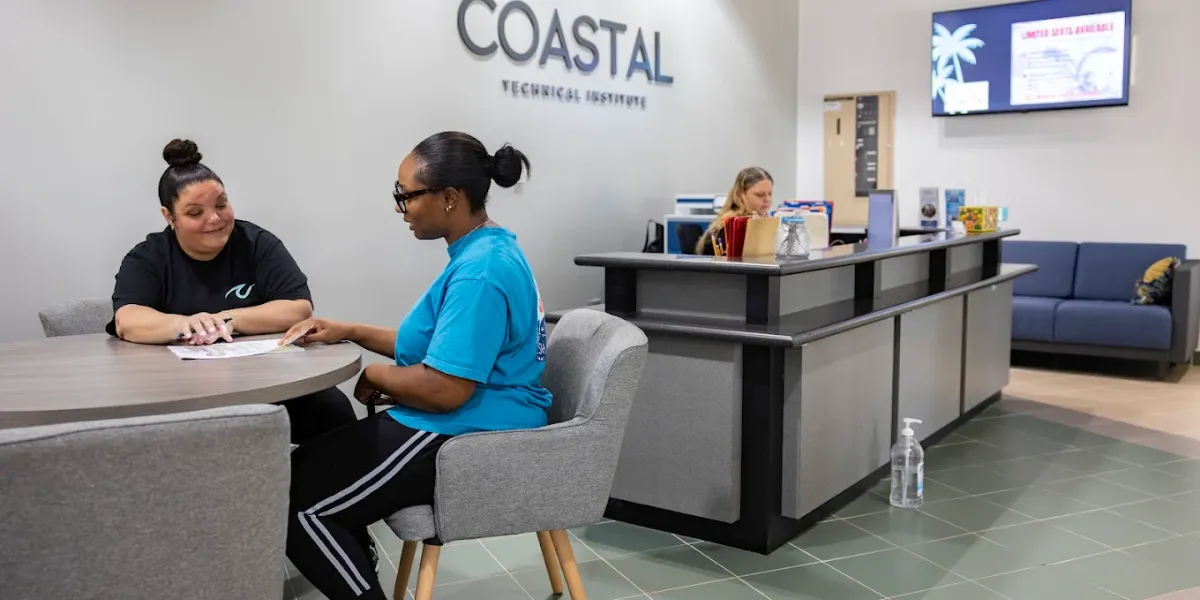
How to Start a High-Demand Career in Healthcare or Skilled Trades Without a 4-Year Degree
The "college-for-all" story is coming to an end, and the numbers prove it. Healthcare and construction jobs are reporting critical staffing needs throughout the country, and millions of college graduates are carrying six-figure student loans, but the degrees don't immediately lead to jobs.
The reality is this: a 4-year degree is not the only path to a stable, well-paying career. People exploring careers without a 4 year degree are finding that technical training has more results, more direct payoffs. In reality, for careers in skilled trades and healthcare, the college path often proves to be more time-consuming and costly.
It'll take less time than most people believe, whether your skilled trades is HVAC or electrical. The salary of an HVAC technician in Florida ranges from $55,000 to $75,000 a year. A licensed practical nurse can become a worker within 12 months of training.
Rising tuition costs and 4-year timelines are real barriers. The average cost of a 4-year college education in the U.S. is now higher than $100,000. Vocational training and industry certifications remove that obstacle substantially, and you're working in less than one year, with skills in high demand today.
When you're ready to create a career path that not only pays you well but is also stable, this blog explains how to do so without a 4-year degree.
Why Choose a Career in Healthcare or Skilled Trades?
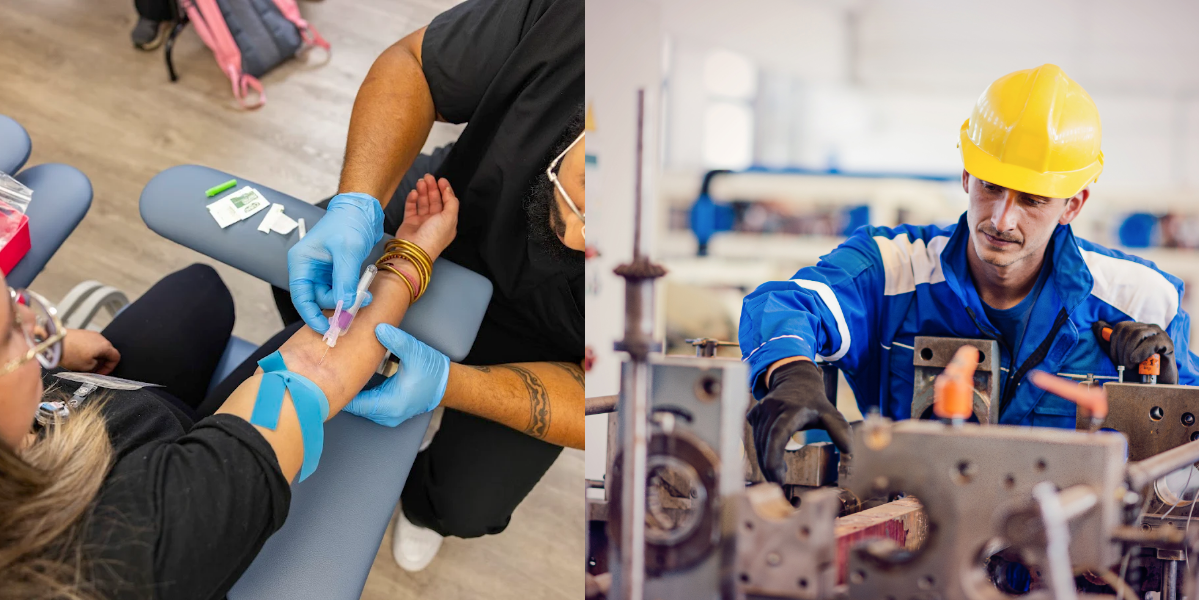
Essential Industry Status
Both a career in healthcare and a career in skilled trades carry what economists call "recession-proof" status. Regardless of economic conditions, hospitals need nurses, homes need electricians, and buildings need HVAC systems. These services are not optional; they are infrastructure services. Such work translates to regular demand, reduced risk of layoffs, and career stability.
Faster ROI
The shorter the program, the sooner you can start earning and have less debt. Taking an LPN course in 12 months of study instead of 4 years of nursing courses means you're on the job market 3 years sooner, which means you are making money, gaining experience, and avoiding years of compounding interest on student loans. Vocational training yields a quantifiable return on investment and becomes a better financial choice for careers without a 4 year degree.
Hands-On Learning
Vocational school vs college is a debate driven by learning style. Not all students learn the same way as a teacher delivers content through lectures. Traditional lecture-based education doesn't work for every learner. Vocational programs are designed around doing. You learn in labs with real equipment and develop skills in environments that are similar to your workplace. If we look at vocational school vs college from a job-ready point of view, the vocational school always wins, as graduates are ready to work from day one.
Top High-Demand Healthcare Careers (No Degree Required)
Practical Nursing (LPN)

Searching for LPN programs near me or practical nursing programs near me is one of the most common starting points for people entering healthcare, and for good reason. Licensed practical nurses are the backbone of patient care facilities across the country.
Role: LPNs deliver health care services to patients, dispense medication, take patients' vital signs, and assist registered nurses in clinical settings. They are employed in health care settings such as hospitals, long-term care facilities, outpatient clinics, and home health facilities.
CTI Path: Coastal Technical Institute offers a focused LPN program designed to prepare students for the NCLEX-PN licensing exam. If you are looking for the best practical nursing programs near me in Palm Bay or Brevard County, CTI's program offers a blend of classroom and clinical experience, ensuring graduates are exam-ready and employer-ready.
Career note: LPN credentials can also be used as a stepping stone. Many LPNs choose to take part in LPN to RN bridge programs, allowing them to broaden their scope of practice and their income without starting over.
Nursing Assistant (CNA) & Home Health Aide (HHA)
Role: CNAs and HHAs deliver front-line care. Generally, CNAs are employed in hospitals and long-term care centers to help patients with daily activities, basic care, and monitoring. The same care HHAs provide in the healthcare setting is delivered directly to patients' doorsteps, where demand is increasing as the U.S. population ages.
Timeline: Our HHA program is one of the most convenient and fast healthcare certifications today, and can be finished in as little time as 4 weeks. This is one of the fastest methods to get into a career in healthcare quickly and cheaply.
These roles offer immediate employment, meaningful work, and a clear pathway toward more advanced fast healthcare certifications in nursing or clinical specialties.
Phlebotomy Training
Role: Phlebotomists are trained specialists who are trained in the collection of blood for diagnostic testing. All hospitals, diagnostic centers, and blood banks depend on certified phlebotomists to gather accurate samples that provide information for the diagnosis and treatment plans for their patients.
Benefit: Phlebotomy training is one of the fast healthcare certifications that you can gain, and it provides immediate access to clinical settings. For those who want to build a career in healthcare but lack the time to pursue the full nursing program, provide an option that's both credentialed and offers practical experience in the hospital environment with a clear pathway to further study.
Top High-Demand Skilled Trades Careers
HVAC (Heating, Ventilation, and Air Conditioning)
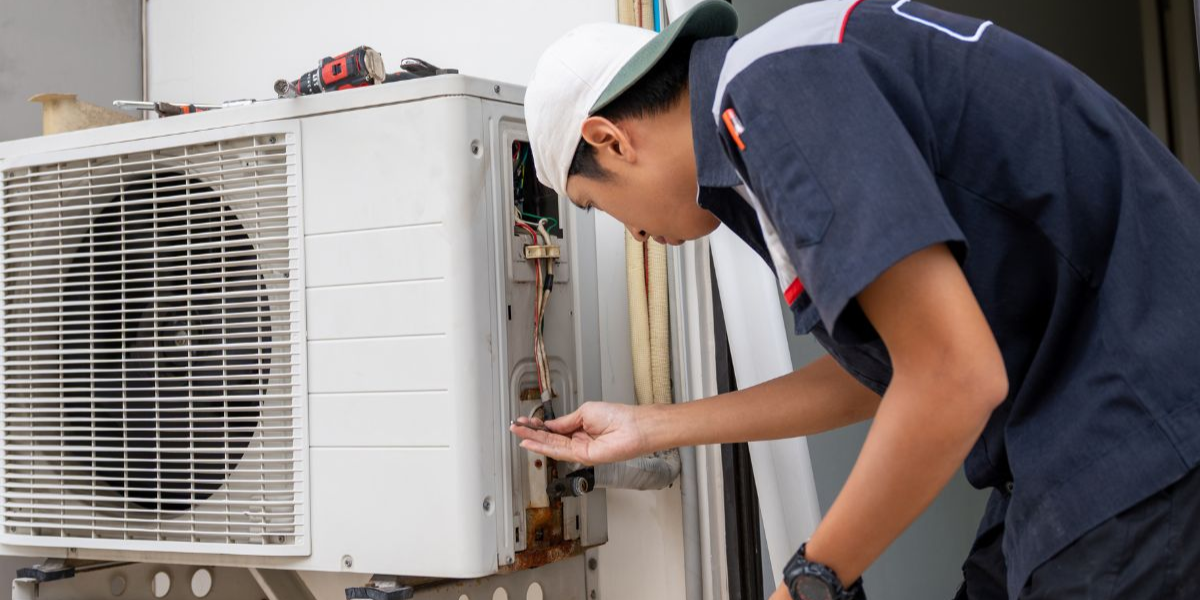
Those looking for HVAC training Florida or HVAC technician training near me are already on the right track. The climate in Florida is such that it is never quiet; there is always a need for trained and skilled HVAC professionals. It isn't seasonal work: residential homes, commercial properties, hospitals, and schools need HVAC installation, maintenance, and repair services every single month of the year.
Demand: The Bureau of Labor Statistics projects HVAC employment to grow faster than the national average for all occupations. That demand is heightened in Florida, where people are particularly interested in HVAC training Florida because of the state's population growth and the fact that cooling systems are a must in the heat and humidity of the region.
Outcome: Coastal Technical Institute is an option for those looking to find HVAC technician training near me in the Space Coast region, and it will take students less than a year to finish. Graduates enter a field with strong starting wages, clear advancement paths, and consistent work availability, all without the cost of a 4-year degree.
Electrical Technology
Role: Electricians serve as the backbone of the residential, commercial, solar, EV charging, and smart home sectors, providing the power for everything. The need for qualified electricians is continually rising, especially as the construction and renewable energy projects continue to grow.
Growth: Electricity underpins all modern infrastructure. Today's focus on solar integration and energy-efficient building systems has added new layers to the trade, and technicians must have the latest and most relevant skills. Vocational school vs college: Electrical technology is one of the most obvious of the direct-employability benefits of a focused training program.
Welding Technology

Role: Welders perform precision joining work across manufacturing, shipbuilding, aerospace, and construction. It is very technical, high-skilled, and precise, which requires both physical accuracy and a working understanding of material science.
Key Fact: One of the most sought-after professions in skilled trades around the world is skilled welding. By 2027, the American Welding Society expects more than 400,000 welding jobs to need filling. Students graduating from a welding program today are joining one of the most in-demand skilled trades in the nation, and it equips them with the leverage they need at the hiring table.
Custom HTML/CSS/JAVASCRIPT
How to Get Started: A Step-by-Step Guide
1️⃣ Step 1: Identify Your Interests
The first question to answer is straightforward: Do you prefer clinical patient interaction or technical problem-solving? A career in healthcare must be able to relate to others, be detail-oriented, and feel comfortable with patient interaction. Careers in skilled trades require critical thinking, accuracy, and proficiency with tools and systems. Neither is harder; they're different. The first and most important decision is knowing what fits you.
2️⃣ Step 2: Choose an Accredited Institution
Not all programs are equal. Check accreditation and state licensure when considering schools. If you're looking for LPN programs near me, practical nursing programs near me, or HVAC technician training near me, the institution's credentials are important. Search for schools that are licensed by the Commission for Independent Education and the Florida Board of Nursing, such as Coastal Technical Institute. Accreditation ensures your certification will be recognized by employers and licensing boards.
3️⃣ Step 3: Leverage Hands-On Training
Make sure the program has labs and real equipment that are industry standard. A healthcare student should practice in a clinical simulation environment. Any HVAC student should be operating on a real system. Hands-on training is the defining advantage in the vocational school vs college comparison, and it's the one thing that separates those who can start working on day one from those who are going to have to wait many months for on-the-job training.
4️⃣ Step 4: Earn Certifications
Certifications are the new credentials. Whether it's the NCLEX-PN for nursing, EPA 608 for HVAC training Florida, or AWS certifications for welders, these are the things an employer is looking for when hiring. Careers without a 4 year degree are created through earned, verifiable certifications, and these credentials are valued in the job market today
5️⃣ Step 5: Utilize Career Services
Look for schools that don't just train you; they help place you. Resume building, interview preparation, and employer partnerships matter. Going from student to working professional is easier when your school has developed relationships with the local employers who are actively recruiting in your industry.
Why Coastal Technical Institute (CTI)?
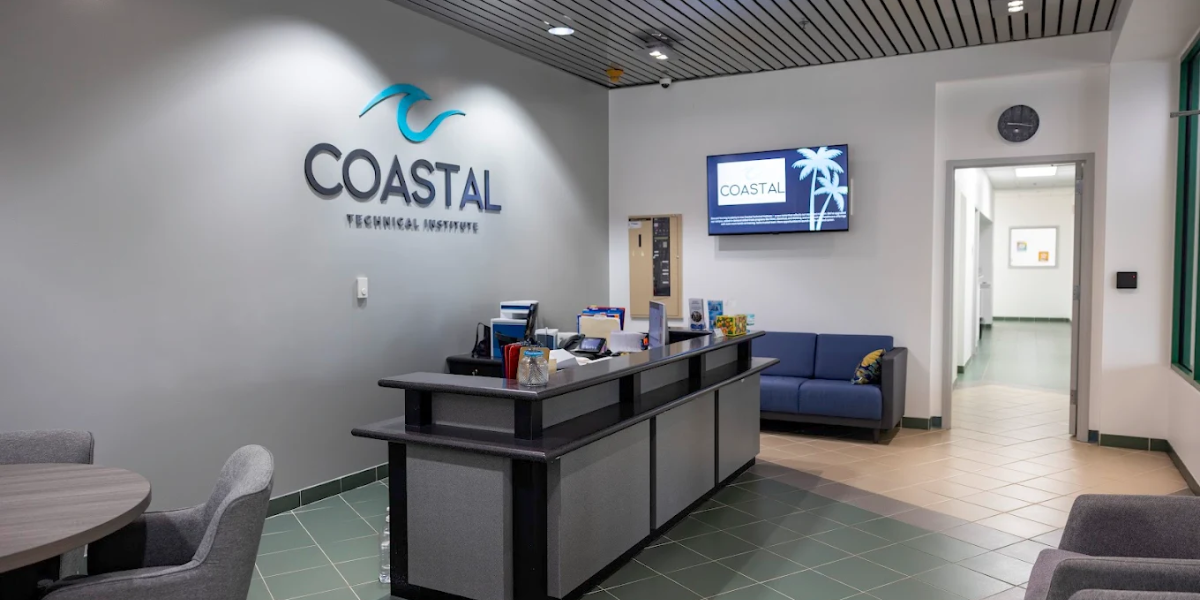
Coastal Technical Institute is located in Palm Bay, FL, serving students across Brevard County and the broader Space Coast region. Whether you are looking for LPN programs near me, practical nursing programs near me, HVAC technician training near me, or HVAC training Florida options, we have everything under one roof, including accredited programs, labs, and career support.
Affordability: Our programs help students gain valuable skills for less than the cost of a traditional degree. The objective is to leave with industry-recognized certifications and not a debt burden that comes with a 4-year degree program.
Accreditation: Our programs are licensed by the Florida Board of Nursing and the Commission for Independent Education, and they are quality programs recognized for their credentials in healthcare and skilled trades.
Career Services: We offer a dedicated career support team, resume building, interview coaching, and direct connections with local employers actively seeking to fill positions, making the transition from completion of the program to employment as direct as possible.
Conclusion
You do not need four years of college to build a rewarding, high-paying career. Whether you're pursuing a career in healthcare as an LPN or HHA, earning fast healthcare certifications in phlebotomy, completing HVAC training Florida, or developing expertise in skilled trades like electrical or welding, the path is real, the demand is proven, and the timeline is measured in months.
If you're still considering the pros and cons of vocational school vs college or exploring careers without a 4-year degree, the evidence is clear: technical training delivers strong outcomes at a faster rate and at a lower cost.
Schedule a campus tour today and see our labs in action.
FAQs
Can I make six figures without a degree?
Yes, especially in specialized skilled trades, such as HVAC, or an LPN-to-RN bridge program. Experienced HVAC technicians and master electricians regularly exceed $80,000–$100,000 annually, making careers without a 4 year degree a financially sound choice.
How long does trade school take?
The length of the program varies from 4 weeks to 12 months, depending on the field. CTI's HHA program is one of the most accessible fast healthcare certifications and can be finished in as little time as 4 weeks, while its LPN program lasts about 12 months.
Is healthcare harder than skilled trades?
Neither is objectively harder; they require different strengths. Healthcare is patient-centered and clinically focused. Skilled trades are technical and systems-oriented. It all depends on the person.
Will I receive help finding a job after completing my program?
Yes. Coastal Technical Institute offers exceptional career services, such as resume preparation, interviewing skills training, and a network of active linkages with local employers to help graduates find jobs soon after graduation.
Are these technical programs affordable for those avoiding student debt?
Absolutely. The vocational school vs college cost comparison strongly favors vocational training. CTI provides low-cost tuition and flexible payment choices, allowing students to finish their education with industry-recognized credentials in a healthcare or skilled trades program without the debt associated with a 4-year college education.
